Why it matters
To me, Lost has been the best television show of the past decade, and deserves a place as one of the great television shows of all time. The trippy narrative structure, the great cast, the mind-bending mysteries and the cool sci-fi elements all contribute to its greatness. But I think its real greatness lies in the themes and issues it explored. Destiny, free will, faith, redemption, renewal, forgiveness, sacrifice – has any other show explored all of these themes so deeply and intimately? I’m glad that the finale embraced the spirituality of the show.
I’ve been a fan of Lost from the very beginning. Although I still consider the first season to be the very best of the series, the last two seasons of Lost have been particularly resonant for me. We’ve watched as Jack has evolved into a Man of Faith. As he began his quest to return to the Island, he never understood exactly what he was doing or why he was doing it, but he took a leap of faith and believed that there was a purpose behind it and that he was fulfilling a calling that was entrusted only to him. In the last 18 months, I’ve experienced circumstances in my own life that have led me to grapple with the same questions that Jack faced. Do things happen for a reason? Do we have a purpose? Will these present trials be woven together like one of Jacob’s tapestries into a greater whole? I’ve always believed that the answer to these questions is “yes,” but watching Jack’s journey has been a great source of comfort and encouragement. I’ve seen online multiple stories of others who have faced their own life struggles and have found the same kind of consolation.
I will miss many things about Lost. I will miss Sawyer’s nicknames. I will miss Michael Emerson’s alternately creepy and hilarious portrayal of Ben Linus. I will miss the love story of Desmond and Penny. I will miss the amazing music by Michael Giacchino. But most of all, I will miss the current of hope that consistently ran through the show. Whether it was the hope of rescue, the hope of redemption, or the hope of chasing destiny, the show was at its best when the characters looked beyond their present tribulations to the promise of something beyond. Perhaps nothing embodies this sense of hope better than the launching of the raft in the first season, one of my all-time favorite scenes from Lost. As the survivors celebrate the raft’s departure and the music swells, the emotion is palpable. They believed in each other and in their collective ability to overcome. In a small church somewhere in the beyond, their hope was realized. They were no longer lost, because they had found each other.
Monday, May 23, 2011
I Wish We Could Go Back
On the occasion of the one-year anniversary of the finale of Lost, here is what I wrote last year about what the show means to me:


Sunday, March 13, 2011
Gnomeo is Bleeding

Disney is releasing one of it's major 2011 tentpoles this weekend, Mars Needs Moms. The impact on Gnomeo is significant, beyond the obvious increase in the number of pictures vying for the family audience. Gnomeo & Juliet is also losing nearly 400 screens to make room for the new wide release. And perhaps most importantly, Gnomeo has lost marketing support. Almost as soon as Gnomeo opened, Disney had to shift all of its marketing and media attention to Mars Needs Moms.

 . The movie was a kind of throwback to the live-action animal adventure films that Disney used to specialize in, was quite well received by audiences, and became an unlikely sleeper hit. But just three weeks later, Disney released The Shaggy Dog
 , a high-profile release starring Tim Allen that benefited from a major marketing push. Eight Below ultimately grossed $81.6 million to Shaggy Dog's disappointing $61.1 million. Had Disney given Eight Below a little more breathing room and support, it's very possible that it could have become an even bigger hit. The weekend that Shaggy Dog debuted, Eight Below's box office dropped 45% after holding well the previous two weekends.
 , one of its last announced traditionally animated films at that time. Disney clearly didn't have high expectations for the film because just four weeks later came The Haunted Mansion
 , a major holiday release timed for the Thanksgiving weekend and starring Eddie Murphy. But once again, the big release underperformed against the sleeper that was overlooked by the studio. Brother Bear ended up grossing $85.3 million versus only $75.8 million for the costly Haunted Mansion.
You want me to keep going? In 2008, Disney released Beverly Hills Chihuahua
 and High School Musical 3
 just three weeks apart, likely cannibalizing itself in the process as both films stalled at the box office before reaching the symbolic $100 million mark.
It's an interesting case study in the importance of properly managing release schedules. Disney didn't have any faith in films like Eight Below and Brother Bear and didn't expect them to have any legs at the box office. But audiences found these movies and liked them even more than the big alternative movie that Disney was pushing just a few weeks later. In the case of Gnomeo, Disney didn't even want to call it a Disney movie. The poor thing bounced around in development for years and was ultimately released under the Touchstone banner. What will audiences choose this time around? Unfortunately, it looks like Mars Needs Moms is on its way to becoming one of Disney's costliest bombs. Wherefore art thou, Gnomeo?
Monday, December 13, 2010
Sinking Early
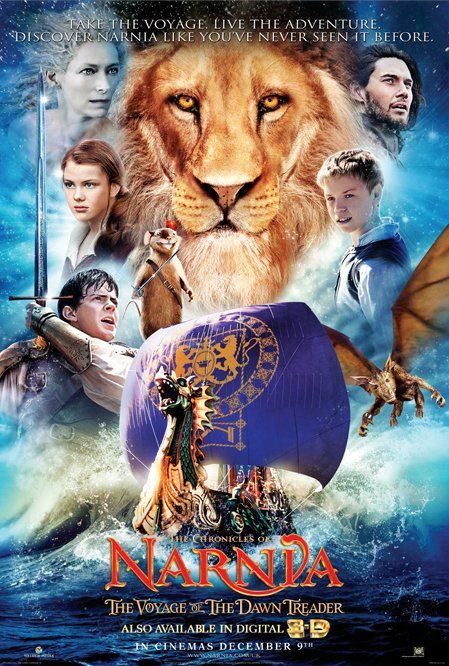
 took in on its opening weekend in 2008, despite the fact that Dawn Treader had the benefit of higher 3D ticket prices. When Fox took over for Disney as Walden Media's partner for the Narnia series, they hoped that they could resuscitate the Narnia franchise by returning to the formula that seemed to work for The Lion, the Witch and the Wardrobe
 : a holiday release date, a family-friendly marketing campaign to erase the dark and battle-heavy memory of Prince Caspian, and aggressive outreach to church audiences (not to mention a budget significantly reduced from the pricey Prince Caspian). Sadly, the box office trajectory for these films is in a steady downward direction, and Disney's decision to get out of the Narnia business is looking pretty smart.
In 2005, The Chronicles of Narnia: The Lion, the Witch and the Wardrobe shocked everyone when it grossed $291 million, outperforming big holiday competitors like Harry Potter and the Goblet of Fire and Peter Jackson's King Kong. Disney thought it had itself a new fantasy-lit franchise on par with Harry Potter and The Lord of the Rings. Unfortunately, Caspian underperformed for a number of reasons and grossed only $141 million. Disney decided the Narnia was less of a franchise and more of a one hit wonder. But Walden persuaded Fox to pick up the franchise and try again. So if Fox "fixed" the perceived problems with the franchise, what happened? Well, the soft opening of Dawn Treader signals that the ongoing appeal of Narnia is simply limited. The series is really only widely known for The Lion, the Witch and the Wardrobe
 . And each of the subsequent books in the series stand alone as a self-contained stories. This leaves only the die-hard Narnia fans to keep coming back.
 There is a little bit of silver (chair) lining to this cloud: the film had a strong $80 million opening in foreign territories. If it can continue to draw audiences during the holidays and does solid business overseas, Fox could still see enough of a return on its investment that goes forward with more films. Unfortunately, Dawn Treader looks like it is following the path of other failed fantasy-lit films such as The Golden Compass and Eragon. In the end, it will be up to Walden Media to decide what to do with the franchise if Fox walks away. Instead of sharing costs with a big studio, Walden could choose to bankroll the next film (likely The Silver Chair) all on its own without a big studio splitting the cost. Walden could then shop it to the major studios purely for a distribution deal. This would be similar to the deal that Marvel made with Paramount before Marvel was acquired by Disney. Under that old deal, Marvel financed Iron Man and Iron Man 2 all on its own, but paid Paramount a fee for marketing and distribution. It's a long shot, but it may be the best hope for those longing to hear Aslan roar on the big screen again.
Thursday, December 9, 2010
Wake Up Call
 Sometime on Thursday, Tangled will cross the $100 million mark at the box office, an important milestone that indicates that the movie is well on its way to being Disney Animation's first big hit in several years. Perhaps in the future we will look back on Tangled as the start of a new renaissance for Walt Disney Animation Studios after a string of disappointments. Of course, this isn't the first time that the animation studio has pulled itself out of a long slumber. Released this week on DVD, Waking Sleeping Beauty
 tells the story of how the studio ushered in a new era of animated classics in the 1980s and 1990s, including The Little Mermaid, Beauty and the Beast
 and The Lion King
 . I had the opportunity to watch the documentary at a special screening at the Smithsonian earlier this year, and I was mesmerized. Seldom does Disney pull back the curtain on itself in such an open and honest way, but the filmmakers (Disney animation vet Don Hahn and former Disney animation executive Peter Schneider) received an astonishing level of cooperation from the company and from the key figures involved in the behind-the-scenes drama: Michael Eisner, Jeffrey Katzenberg and Roy Disney. In many ways, the film covers much of the same ground as the excellent book DisneyWar
 , but with a particular focus on the animation studio and the people that worked there. If you are a Disney fan, an animation fan, or simply interested in the business of show business, I highly recommend you give Waking Sleeping Beauty a look.
Monday, November 29, 2010
Turkey & Crow

Tuesday, October 12, 2010
Focused on the Family?
![Avatar (Three-Disc Extended Collector's Edition + BD-Live) [Blu-ray]](http://ws.amazon.com/widgets/q?MarketPlace=US&ServiceVersion=20070822&ID=AsinImage&WS=1&Format=_SL160_&ASIN=B0044XV3QY&tag=talesof0c-20) Last week, Fox announced the details of the new super deluxe 3-disc DVD release of Avatar
Last week, Fox announced the details of the new super deluxe 3-disc DVD release of Avatar . It has all the usual bells and whistles and more. But what really caught my attention was the inclusion of a "Family Audio Track" that purportedly removes all objectionable language. To my knowledge, this is the first time that the home video release of a major blockbuster has offered this kind of option and it reminded me of the controversy from a few years ago concerning ClearPlay and CleanFlicks.
 At the time, the movie studios and a group of notable directors objected to the idea that someone else could tamper with their creative work without the approval of the studio or the filmmaker. ClearPlay, which offers a DVD player that allows parents to filter out offensive content without actually altering the film itself, was eventually protected by federal legislation in 2005. CleanFlicks, which edited films and then produced and sold the edited copies, was effectively shut down by a lawsuit for violating copyright law in 2006. In this instance, however, it is the studio itself that is offering a cleaned up version of the movie; and given director James Cameron's meticulous attention to every detail of his films, it can be reasonably assumed that he approved the new audio track as well. Studios and filmmakers do this sort of thing regularly, of course, producing edited versions of films for airlines and for broadcast television. But this is the first time that I've seen such an edit made commercially available (the general practice actually works the opposite direction, with DVDs regularly providing unrated versions of films that promise even more profanity, nudity, gore, etc.)
What makes this feature all the more refreshing is the fact that it is so unnecessary from a business standpoint. Let's face it, Avatar is already the highest grossing film of all time. There's not much room for significantly expanding the audience and the DVD will sell millions of copies regardless of the audio track. But it's a nice tip of the hat to discerning parents who were maybe on the fence about letting their 9 or 10-year-old see the movie. You may find other aspects of Avatar objectionable, such as the political subtext or the violence, and an alternate audio track won't fix that for you. But if you consider it to simply be a really cool sci-fi epic with a little too much rough language for younger ears, the family audio track just might give you a nice option for sharing the movie with your kids. And just as every big movie has jumped on the 3D bandwagon in light of Avatar's success, perhaps more films will follow this example and give families more home viewing choices.
And just as every big movie has jumped on the 3D bandwagon in light of Avatar's success, perhaps more films will follow this example and give families more home viewing choices.Saturday, August 28, 2010
Disney's record-setting year

 and Toy Story 3
 have easily surpassed whatever high expectations anyone might have set for them. When you add in the success of Iron Man 2
 , which was distributed by Paramount but produced by Disney-owned Marvel Studios, it's been an unprecedented year of success at the box office for Disney.
 Well, almost. After all, there were those two high-profile releases from Disney's resident hit-maker, Jerry Bruckheimer. First it was Prince of Persia, which kicked off the summer with designs to be the next big Disney franchise in the vein of Pirates of the Caribbean. Next came The Sorcerer's Apprentice, which reunited the director, producer and star of the National Treasure films for another attempt at a new franchise. Both have been pretty big busts. With combined budgets of over $350 million, plus marketing and release costs that likely exceed $200 million, the two films together have brought in about $480 million worldwide. In other words, they've lost a lot of money. In hindsight, it seems pretty clear that Disney would have been better off continuing the Narnia series instead of trying to build a new fantasy franchise from scratch. And it seems equally clear that Bruckheimer, Nicolas Cage, and Jon Turteltaub should focus their energies on National Treasure 3. Then again, what's a loss of a few hundred million dollars when you are raking in over $2 billion?
Looking at the rest of the year, Disney still has two big releases yet to come. The first is


Finally, there's Tron: Legacy. In contrast to Tangled, Disney has been marketing this film brilliantly. if the film is anywhere close to as good as what we've been shown so far, it should be a solid hit for the studio. Hopefully, when 2010 comes to a close, Disney will still have plenty to cheer about.
Friday, July 23, 2010
Disney Shows Off For The Fans
Today was the first day of Comic-Con in San Diego, the annual geekfest that has become a mandatory destination for studios trying to generate buzz for their big tent-pole movies. Disney made a splash two years ago when it surprised attendees with test footage for a new TRON film that was early in development. Flash-forward to today, as Disney hosted a full panel on TRON: Legacy, it's big holiday release film for 2010. The new full trailer is a stunner.
Not too shabby, eh? Pay close attention to the "young" Jeff Bridges. Does he pass muster? Or does he take you to the uncanny valley? I think it works for me, so long as they don't linger on the eyes for too long. And unlike recent so-called 3D movies that were only converted to the 3D format as an afterthought to sell more ridiculously high-priced tickets (I'm looking at you Clash of the Titans and The Last Airbender), TRON: Legacy was actually filmed in 3D, which means you'll be getting a much more authentic experience should you choose to fork over the extra money.
But Disney, which has been surprising adept at putting on a good show for the Comic-Con crowd, had a couple of additional surprises. First there was a taped greeting from Johnny Depp, in character as Jack Sparrow, and in 3D (natch), teasing the audience about the zombies and mermaids that will be featured in next summer's Pirates of the Caribbean: On Stranger Tides.
But wait, there's more! Disney had one last surprise up it's sleeve. Are you ready for another attempt at making a movie out of The Haunted Mansion attraction? What if I told you that this version was being created by director Guillermo Del
Del Toro and that Eddie Murphy would be nowhere in sight? Del Toro promises it will be "scary and fun at the same time" and that if you take your kids they will scream. Sounds good to me!
film that was early in development. Flash-forward to today, as Disney hosted a full panel on TRON: Legacy, it's big holiday release film for 2010. The new full trailer is a stunner. Not too shabby, eh? Pay close attention to the "young" Jeff Bridges. Does he pass muster? Or does he take you to the uncanny valley? I think it works for me, so long as they don't linger on the eyes for too long. And unlike recent so-called 3D movies that were only converted to the 3D format as an afterthought to sell more ridiculously high-priced tickets (I'm looking at you Clash of the Titans and The Last Airbender), TRON: Legacy was actually filmed in 3D, which means you'll be getting a much more authentic experience should you choose to fork over the extra money.
But Disney, which has been surprising adept at putting on a good show for the Comic-Con crowd, had a couple of additional surprises. First there was a taped greeting from Johnny Depp, in character as Jack Sparrow, and in 3D (natch), teasing the audience about the zombies and mermaids that will be featured in next summer's Pirates of the Caribbean: On Stranger Tides.
But wait, there's more! Disney had one last surprise up it's sleeve. Are you ready for another attempt at making a movie out of The Haunted Mansion attraction? What if I told you that this version was being created by director Guillermo
Del Toro and that Eddie Murphy would be nowhere in sight? Del Toro promises it will be "scary and fun at the same time" and that if you take your kids they will scream. Sounds good to me! Thursday, June 10, 2010
First Look: Tangled
Disney has unveiled the first full trailer for it's big holiday release, Rapunzel Tangled. I imagine it will show before Toy Stoy 3 next weekend. Watch the trailer and then read my first impressions below.
Consistent with the concept art we've seen, the animation is pretty amazing. There's something about the depth and texture that I don't think I've seen before in computer animation. It really does seem like they took the Disney hand-drawn style of animation and translated it into computer animation.
Regarding the movie itself, I guess I'm lukewarm. Based on the few scenes we're shown, it looks like they're trying a little too hard to convey the message that this is not a "princess film." The trailer gives the majority of screen time to the hero, emphasizes a jokey tone, and the name "Rapunzel" is never even mentioned. I'm not sure if that's the right way to go. I'm also disappointed by the continuing trend of using the clunky "Disney" brand title (instead of "Walt Disney Pictures Presents" or "Disney's"). It just looks awkward. All in all, I'm still interested in seeing more, so I suppose that's a good thing. But what about everyone else?
Consistent with the concept art we've seen, the animation is pretty amazing. There's something about the depth and texture that I don't think I've seen before in computer animation. It really does seem like they took the Disney hand-drawn style of animation and translated it into computer animation.
Regarding the movie itself, I guess I'm lukewarm. Based on the few scenes we're shown, it looks like they're trying a little too hard to convey the message that this is not a "princess film." The trailer gives the majority of screen time to the hero, emphasizes a jokey tone, and the name "Rapunzel" is never even mentioned. I'm not sure if that's the right way to go. I'm also disappointed by the continuing trend of using the clunky "Disney" brand title (instead of "Walt Disney Pictures Presents" or "Disney's"). It just looks awkward. All in all, I'm still interested in seeing more, so I suppose that's a good thing. But what about everyone else?
Friday, June 4, 2010
Looking for Prince Charming
After the billion-dollar performance of Alice in Wonderland earlier this spring, Disney executives must have been thinking that 2010 would be a record setting year for the studio at the box office. With Toy Story 3 and Tron: Legacy still to come, that may yet be the case. But with Memorial Day weekend now behind us, it’s clear that Disney’s path to box-office glory has hit a speed bump.
 Prince of Persia: The Sands of Time was supposed to be the next big Disney franchise. Based on a popular video game
 , Prince of Persia was an opportunity to launch a new adventure series in the mold of Pirates of the Caribbean
 that would appeal to audiences of all ages, spawn multiple sequels, sell shelves of merchandise, and maybe even inspire new attractions in the parks. The film had a promising pedigree, with hit-maker Jerry Bruckheimer producing and Harry Potter veteran Mike Newell directing. Leading up to its opening weekend, the marketing was so ubiquitous that clearly no expense was spared. Alas, the film opened in second place for an anemic $37.8 million for the four-day Memorial Day weekend (only $30 million for the Friday to Sunday period). Prince of Persia, which cost an estimated $200 million to make and heaven only knows how much to market, will be lucky to gross even $100 million at the domestic box office, and so this new franchise is already over before it got started.
Ironically, Prince of Persia was conceived, at least in part, as sort of a replacement for another adventure franchise that Disney had chosen to abandon for its perceived poor performance. 2005’s The Chronicles of Narnia: The Lion, the Witch and the Wardrobe ended up as one of Disney’s biggest all-time hits, with a domestic gross of nearly $300 million and a global gross of over $700 million. With Narnia, Disney had seemingly found its own family-friendly, fantasy-literary series on par with Harry Potter or The Lord of the Rings.
But unlike the Harry Potter franchise, which has released nearly all of its films on a compressed 12 or 18-month schedule, there was a gap of two and a half years between Lion and its sequel, The Chronicles of Narnia: Prince Caspian
 .* In addition, Prince Caspian was pushed from the holiday release date that had served its predecessor so well and was released in May 2005, the start of the summer movie season, right between the much buzzed-about Iron Man
 and the intensely anticipated Indiana Jones and the Kingdom of the Crystal Skull
 . To make matters even worse, the film was marketed badly . Instead of building on the goodwill held toward the first film and the returning characters, Disney pushed Prince Caspian as a dark and intense action movie and tried to position the new title character as a teen heartthrob.
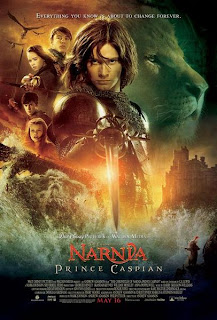 With the long gap between films, the unfavorable competition and an ill-suited marketing effort, Prince Caspian unsurprisingly debuted to a soft $55 million on its way to a total domestic box office take of $141 million and a total global box office haul of $419 million.** Given that this was far below the performance of the first Narnia film, Disney re-considered its commitment to the franchise. The decision was complicated by the fact that Disney shared the costs and profits for the Narnia films with Walden Media, which actually controls the rights to the books. Walden Media had already begun pre-production on the third Narnia film, The Voyage of the Dawn Treader
 , which was originally slated to be released in May 2010. After haggling with Walden over budget costs, release dates and other issues, Disney walked away from the partnership and Walden will now release Dawn Treader in December with 20th Century Fox. Prince of Persia was then fast-tracked by Disney to fill the May 2010 slot and here we are.
In hindsight, Disney would have been much better off sticking with the Narnia franchise instead of trying to build a new franchise from scratch. While both Prince of Persia and Prince Caspian cost north of $200 million to produce, Walden had agreed to scale back the budget for Dawn Treader to something in the range of $140 million. Furthermore, Disney would have only been on the hook for half of that because it shared the financial risk (and reward) for Narnia with Walden Media, limiting its exposure in the event of failure. With Prince of Persia, Disney shoulders all of the loss on its own but would have probably been obligated to make significant payouts to Bruckheimer had the film been a success. With regard to marketing costs, it’s always easier to sell an existing brand then to introduce something new and unknown to the masses.
 Finally, the fact the Narnia is already an established brand with at least one well-regarded and popular film to serve as an anchor makes it easier to profit from subsequent films, regardless of how successful they are at the box office.*** The release of a new franchise film inevitably reinvigorates interest in the older films resulting in new sales of DVDs and other merchandise. Simply the ability to bundle
 the films together as a new box set of the "Narnia Trilogy" could provide new revenue. And because of Narnia’s literary
 roots
roots , it has a much higher likelihood of enduring as an “evergreen” property that can sustain ventures long after the movies are done, such as theme park attractions.****
In this tale of two princes, Disney simply chose the wrong prince. Had Dawn Treader been released by Disney in place of Prince of Persia, it is very plausible that it would have out-performed Prince Caspian or at the least done no worse than Prince of Persia. But Disney would have spent less money overall and had more opportunity for ancillary revenue. Nonetheless, I have a feeling that a certain cowboy and space ranger will still provide a fairy tale ending for Disney’s summer.
* The tight release schedule serves three purposes: 1) it maintains public interest in the franchise, particularly among fickle younger movie goers; 2) it achieves some efficiency in production costs; and 3) it ensures that the young actors don’t age beyond their characters in between films.
** Although Prince of Persia has debuted to a decent start in international markets and could still prove to be a success in that regard, its opening weekend abroad was 17% lower than the foreign debut of Prince Caspian.
*** It's worth noting that among fans of Narnia, Dawn Treader is widely considered to be the most popular book in the series, while Prince Caspian is generally one of the least popular.
**** Disney created a temporary walk-through attraction the Narnia films at Disney’s Hollywood Studios inOrlando
earlier this spring, Disney executives must have been thinking that 2010 would be a record setting year for the studio at the box office. With Toy Story 3 and Tron: Legacy still to come, that may yet be the case. But with Memorial Day weekend now behind us, it’s clear that Disney’s path to box-office glory has hit a speed bump.  , Prince of Persia was an opportunity to launch a new adventure series in the mold of Pirates of the Caribbean that would appeal to audiences of all ages, spawn multiple sequels, sell shelves of merchandise, and maybe even inspire new attractions in the parks. The film had a promising pedigree, with hit-maker Jerry Bruckheimer producing and Harry Potter veteran Mike Newell directing. Leading up to its opening weekend, the marketing was so ubiquitous that clearly no expense was spared. Alas, the film opened in second place for an anemic $37.8 million for the four-day Memorial Day weekend (only $30 million for the Friday to Sunday period). Prince of Persia, which cost an estimated $200 million to make and heaven only knows how much to market, will be lucky to gross even $100 million at the domestic box office, and so this new franchise is already over before it got started.
 Ironically, Prince of Persia was conceived, at least in part, as sort of a replacement for another adventure franchise that Disney had chosen to abandon for its perceived poor performance. 2005’s The Chronicles of Narnia: The Lion, the Witch and the Wardrobe
ended up as one of Disney’s biggest all-time hits, with a domestic gross of nearly $300 million and a global gross of over $700 million. With Narnia, Disney had seemingly found its own family-friendly, fantasy-literary series on par with Harry Potter or The Lord of the Rings. But unlike the Harry Potter franchise, which has released nearly all of its films on a compressed 12 or 18-month schedule, there was a gap of two and a half years between Lion and its sequel, The Chronicles of Narnia: Prince Caspian
.* In addition, Prince Caspian was pushed from the holiday release date that had served its predecessor so well and was released in May 2005, the start of the summer movie season, right between the much buzzed-about Iron Man and the intensely anticipated Indiana Jones and the Kingdom of the Crystal Skull. To make matters even worse, the film was marketed badly . Instead of building on the goodwill held toward the first film and the returning characters, Disney pushed Prince Caspian as a dark and intense action movie and tried to position the new title character as a teen heartthrob. With the long gap between films, the unfavorable competition and an ill-suited marketing effort, Prince Caspian unsurprisingly debuted to a soft $55 million on its way to a total domestic box office take of $141 million and a total global box office haul of $419 million.** Given that this was far below the performance of the first Narnia film, Disney re-considered its commitment to the franchise. The decision was complicated by the fact that Disney shared the costs and profits for the Narnia films with Walden Media, which actually controls the rights to the books. Walden Media had already begun pre-production on the third Narnia film, The Voyage of the Dawn Treader, which was originally slated to be released in May 2010. After haggling with Walden over budget costs, release dates and other issues, Disney walked away from the partnership and Walden will now release Dawn Treader in December with 20th Century Fox. Prince of Persia was then fast-tracked by Disney to fill the May 2010 slot and here we are.
In hindsight, Disney would have been much better off sticking with the Narnia franchise instead of trying to build a new franchise from scratch. While both Prince of Persia and Prince Caspian cost north of $200 million to produce, Walden had agreed to scale back the budget for Dawn Treader to something in the range of $140 million. Furthermore, Disney would have only been on the hook for half of that because it shared the financial risk (and reward) for Narnia with Walden Media, limiting its exposure in the event of failure. With Prince of Persia, Disney shoulders all of the loss on its own but would have probably been obligated to make significant payouts to Bruckheimer had the film been a success. With regard to marketing costs, it’s always easier to sell an existing brand then to introduce something new and unknown to the masses.
 the films together as a new box set of the "Narnia Trilogy" could provide new revenue. And because of Narnia’s literary roots, it has a much higher likelihood of enduring as an “evergreen” property that can sustain ventures long after the movies are done, such as theme park attractions.****
In this tale of two princes, Disney simply chose the wrong prince. Had Dawn Treader been released by Disney in place of Prince of Persia, it is very plausible that it would have out-performed Prince Caspian or at the least done no worse than Prince of Persia. But Disney would have spent less money overall and had more opportunity for ancillary revenue. Nonetheless, I have a feeling that a certain cowboy and space ranger will still provide a fairy tale ending for Disney’s summer.
* The tight release schedule serves three purposes: 1) it maintains public interest in the franchise, particularly among fickle younger movie goers; 2) it achieves some efficiency in production costs; and 3) it ensures that the young actors don’t age beyond their characters in between films.
** Although Prince of Persia has debuted to a decent start in international markets and could still prove to be a success in that regard, its opening weekend abroad was 17% lower than the foreign debut of Prince Caspian.
*** It's worth noting that among fans of Narnia, Dawn Treader is widely considered to be the most popular book in the series, while Prince Caspian is generally one of the least popular.
**** Disney created a temporary walk-through attraction the Narnia films at Disney’s Hollywood Studios in
Tuesday, May 25, 2010
See You In Another Life, Brother

Let’s get something out of the way right at the start. Playing the “dog card” at the end of a long, emotional story is dirty pool. You all know what I’m talking about. I’m already barely holding it together and then Vincent shows up and lies down next to Jack to keep him company during his final moments. That was it, game over for me. Hand me the Kleenex! (Warning: sad picture included below!) And thus concluded an extremely satisfying and emotionally heart-wrenching finale to Lost. Let’s dig in and look at what happened, what it means, and what it means to me.
Desmond was wrong
Ever since Desmond returned to the Island and had his breakthrough with the sideways world, I thought that both versions of Desmond were working toward the same goal. But we learned that this was not the case and that the two Desmonds were doing two very different things. When Desmond was put in Widmore’s electromagnetic frying pan, he saw a glimpse of the sideways world. He thought it was an alternate reality and timeline, the by-product of “The Incident,” and he thought he could somehow usher his friends there as an escape plan. He was basically operating under the premise that Jack’s original plan to reset the timeline with a hydrogen bomb had worked and he just needed to help everyone get there. But he was wrong. He had not experienced a flash of consciousness through time and space as he has had in the past. What actually occurred was more of a near-death experience and what he had seen was the after-life (or whatever you want to call it, we’ll get to that later). This led to that great exchange with Jack where Desmond tried to persuade him that they could escape to this other reality. No, Jack told him. There are no cheats, no shortcuts, and everything they do matters. I loved this scene because it was the show telling us, the viewers, that this is for real. For so much of the show, fans have wondered whether the Island was real. Maybe it was hell, or purgatory, or a figment of Hurley’s imagination. The show has played with these theories with a wink in past episodes, but I feel like this entire season, and the entire existence of the sideways storyline, was intended to tell us once and for all that the Island is real and what happened to them there mattered. Jack definitively repeated Faraday’s axiom, “what happened, happened,” and he was right.
The Incident
I’m now personally convinced that detonating the bomb didn’t change the timeline at all. It is, in fact, what always happened. It was always a part of the Incident that led to the building of the Swan Station and the hatch and the button. But the Incident was still successful in that it returned our castaways to the Island present. It’s also still possible that the Incident served as the catalyst that led to the creation of the sideways world. Christian Shepherd told Jack that this was the place that he and his friends had created so that they could all be together again. Instead of a reboot of history, the sideways world was more of a metaphysical place of collective consciousness and memory where they could gather when their lives were over. I’m not sure if that’s what really happened, but I think it’s an interesting theory that is at least consistent with what we know.
The sideways Desmond, in contrast to his Island counterpart, was operating under a completely different reality. Once he actually met and made contact with Penny in the stadium, he recalled full consciousness of his previous life and realized where he was. It then became his mission to reunite all of his friends from the Island and help them achieve the same total recall of their old lives so that they could experience the joy of being together again.
Jack and Smokey were both right
Smokey thought that Desmond would destroy the Island. Jack thought that Desmond would enable him to kill Smokey. They were both right. When Desmond pulled the stopper (the cork!), the life-giving water of the Island was drained. (Sidenote: I loved the shot of Jack and Smokey looking over the edge of the waterfall and the way it closely mirrored the shot of Jack and Locke looking down the hatch) This had the effect of literally draining the power from the Island. It started to fall apart. Richard had a grey hair! And Smokey was now physically vulnerable in the corporeal form of Locke’s body. After an exciting duel on the cliff and an assist from Kate, Smokey was defeated, but the Island was still crumbling. Fortunately, as we’ve been told a couple of times this season, nothing is irreversible. Jack believed that he could go back into the magic cave and put the cork back in and replenish the water of the Island.
Partings and Meetings
The last act of the episode was punctuated by a series of farewells and reunions. Jack and Kate said goodbye to each other, with each finally and sincerely professing their love for each other. When Kate lamented, “Tell me I’m going to see you again,” it was almost tragic. For anyone that cared about the whole Jack-Kate-Sawyer triangle, it felt that we were given closure that the relationship between Jack and Kate was ultimately the real deal. Then Hurley and Jack said their good-byes, and that was also a heartbreaking. I really liked the symmetry of each telling the other “I believe in you.” I also think Hurley is a fantastic choice to protect the Island. In hindsight, his arc this season clearly prepared him for the role. Ben’s encouragement to Hurley was a very sweet encapsulation of why we love Hurley: “you can start by doing what you do best – taking care of people.”
In the sideways world, Desmond’s project was gaining traction and we were treated to multiple reunions of friends long-parted. The grin on Hurley’s face when he first saw Charlie melted my heart, but the reunion between Claire and Charlie and between Sawyer and Juliet really cranked up the waterworks for me. I was deeply moved in a different way by Ben’s contrite confession to Locke and Locke’s offer of forgiveness. By the time we reached the church with Jack, I knew we were close to resolution. Jack’s reconciliation with his father was brief, but still touching and cathartic.
Turned Sideways
I’ll be honest, I didn’t completely grasp that everyone in the sideways world was dead until the same moment that Jack did. I don’t know whether to properly designate this place as heaven, or the after-life, or purgatory. I think I like Christian Shepherd’s description the best: it’s a place where they can all be together again. Beyond my half-baked theory above, I don’t want to worry too much about what the sideways world actually is. I’m more interested in what it means.
The thing I loved the most about the finale is that the show found a way to bring back all the characters that we’ve loved and lost without negating or diminishing all of the tragedies and sacrifices we’ve experienced over the last six seasons. The ending wasn’t a cheat; it was an earned reward for both the characters and the audience. I think that’s why we spent a whole season exploring the sideways world with the characters before we knew what it really was. They didn’t want the ending to feel cheap and tacked on. They wanted this to be an authentic part of the journey. It was also just another fun mystery to explore during the final season. Here’s a new question to explore: why did Jack have a son in the sideways world? My theory is that he was a projection of the kind of relationship Jack wanted to have with his own father. I think you could go through each character’s experience in the sideways world and explore what it tells us about him or her.
Where they left things
For people keeping score, we know that Sawyer, Kate, Claire, Miles, Richard, and Lapidus made it off the Island. We know that Hurley, Ben, Desmond, Rose, Bernard, and Vincent are still on the Island. It’s possible there are a few other survivors still on the Island too who scattered after Smokey’s purge of the temple and Widmore’s mortar attack on the beach. I’d like to think that Hurley found a way to get Desmond home to Penny and Charlie. I’d also like to think that Claire had a happy life with Aaron and that maybe Sawyer even established a relationship with his child. I imagine that Hurley and Ben had a long and successful reign on the Island full of great adventures with new Island visitors (Do I want to see any of those adventures? Okay, sure!).

The End
When Jack emerged from the other end of the cave and started wandering through the bamboo forest, I realized where we were headed. I knew that they were recreating the opening scene of the show. I even guessed that Vincent would probably show up, just as he did in the beginning. It did not matter that I knew, I was still a mess. It was a beautiful scene, and I loved that he got a glimpse of the plane flying overhead so that he had the comfort of knowing he really had saved his friends. Jack had fulfilled his purpose, and he was at peace.
What did you expect?
If you are someone who was frustrated by the finale, I neither share your disappointment nor understand it. I acknowledge that the show didn’t answer every single mystery. Why was Walt so special? What was up with Jacob’s cabin? Why do women die during childbirth on the Island? Why was there a Dharma supply air drop in 2004? What makes Eloise Hawking so creepy?
This is what I say to that -- So what? Yes, I was hoping for a few more answers to some of those questions too. But having those answers now would not change the way I feel about the finale or the way I feel about the series as a whole. I was more invested in the characters than I was in the questions. Life is full of mystery, and sometimes we don’t get all of the answers. I think the audience has taken for granted just how many questions the show did answer. Furthermore, part of the fun of Lost was debating and theorizing about the unanswered questions. Think of the unresolved questions as a parting gift that allows the discussion to continue. Fittingly, the finale focused firmly on the characters. Isn’t that they way it should have been? Didn’t you want a happy ending? One reason I was so delighted by the episode is that I didn’t actually think we would get a happy ending! Now that the story has been told, do any of those unanswered questions still matter?
Why it matters
To me, Lost has been the best television show of the past decade, and deserves a place as one of the great television shows of all time. The trippy narrative structure, the great cast, the mind-bending mysteries and the cool sci-fi elements all contribute to its greatness. But I think its real greatness lies in the themes and issues it explored. Destiny, free will, faith, redemption, renewal, forgiveness, sacrifice – has any other show explored all of these themes so deeply and intimately? I’m glad that the finale embraced the spirituality of the show.
I’ve been a fan of Lost from the very beginning. Although I still consider the first season to be the very best of the series, the last two seasons of Lost have been particularly resonant for me. We’ve watched as Jack has evolved into a Man of Faith. As he began his quest to return to the Island, he never understood exactly what he was doing or why he was doing it, but he took a leap of faith and believed that there was a purpose behind it and that he was fulfilling a calling that was entrusted only to him. In the last 18 months, I’ve experienced circumstances in my own life that have led me to grapple with the same questions that Jack faced. Do things happen for a reason? Do we have a purpose? Will these present trials be woven together like one of Jacob’s tapestries into a greater whole? I’ve always believed that the answer to these questions is “yes,” but watching Jack’s journey has been a great source of comfort and encouragement. I’ve seen online multiple stories of others who have faced their own life struggles and have found the same kind of consolation.
I will miss many things about Lost. I will miss Sawyer’s nicknames. I will miss Michael Emerson’s alternately creepy and hilarious portrayal of Ben Linus. I will miss the love story of Desmond and Penny. I will miss the amazing music by Michael Giacchino. But most of all, I will miss the current of hope that consistently ran through the show. Whether it was the hope of rescue, the hope of redemption, or the hope of chasing destiny, the show was at its best when the characters looked beyond their present tribulations to the promise of something beyond. Perhaps nothing embodies this sense of hope better than the launching of the raft in the first season, one of my all-time favorite scenes from Lost. As the survivors celebrate the raft’s departure and the music swells, the emotion is palpable. They believed in each other and in their collective ability to overcome. In a small church somewhere in the beyond, their hope was realized. They were no longer lost, because they had found each other.
Subscribe to:
Posts (Atom)